
7 Common Dishwasher Problems — What to Check Before You Call
Dishes still dirty after a full cycle? Water pooled in the bottom of the tub? An error code flashing on the control panel? Dishwasher failures frustrate every household and Yurii and the Spark Appliance Repair team answer the same seven problems on service calls across San Diego County week after week. Here's what each one means, what you can check yourself in five minutes, and what it typically costs when a tech needs to step in.
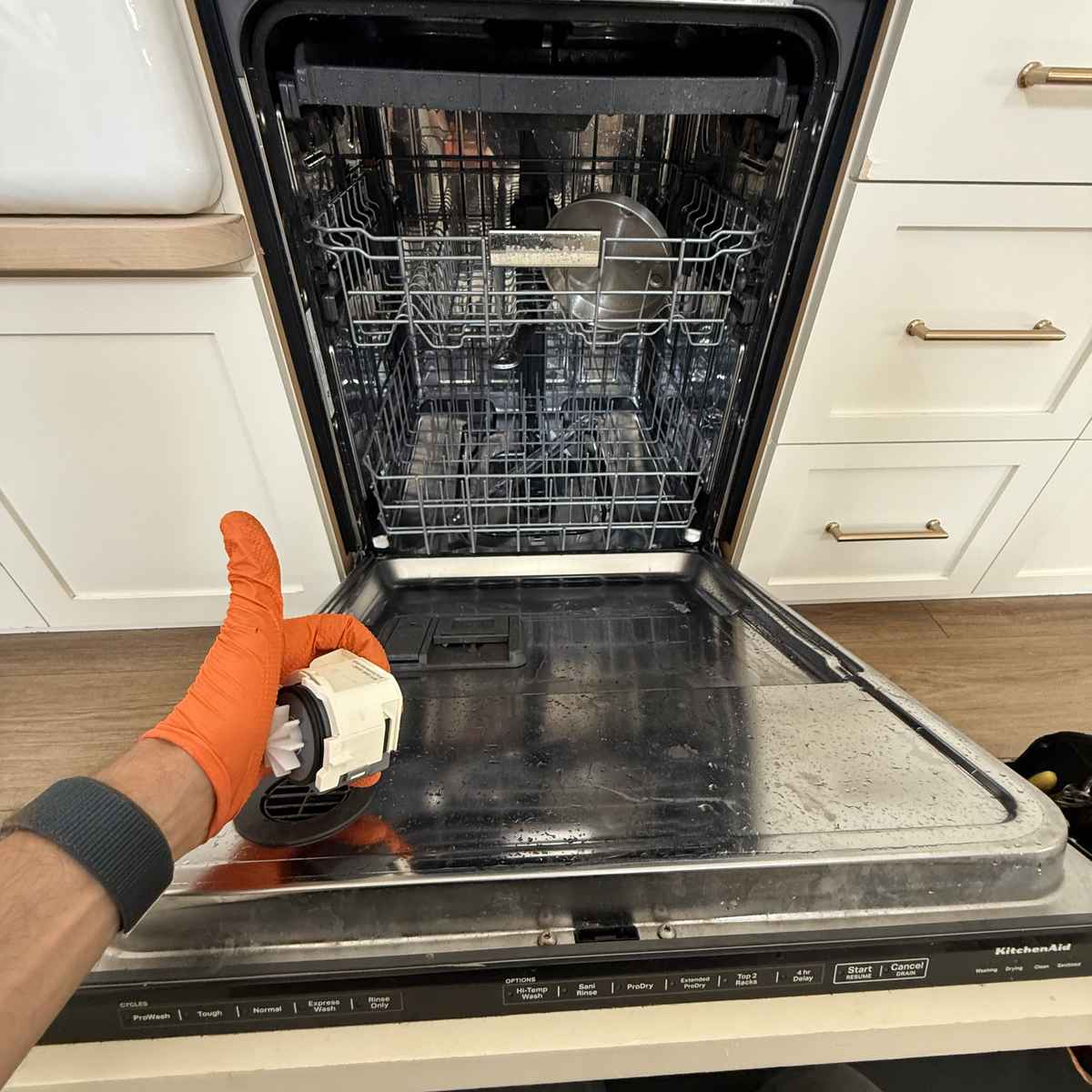
1. Not Cleaning Dishes Properly
The number-one dishwasher complaint — and usually not a broken machine. The three most common causes are a clogged spray arm (food particles plug the water jets), cool incoming water (modern dishwashers need 120°F hot water at the inlet), or the detergent dispenser not opening mid-cycle. If you see detergent still in the cup at the end of the cycle, that's your answer.
Signs: Food residue on dishes; cloudy film; detergent visible in dispenser after cycle; glasses gritty to touch.
What to do: Remove the spray arms and flush with water — you'll often see grit come out of the jets. Run the kitchen sink hot tap until water is genuinely hot before starting a cycle. If the dispenser door is stuck, the latch spring or wax motor needs replacement.
Typical cost: Spray arm cleaning: free DIY. Detergent dispenser replacement: $120–$220. Circulation pump (worst case): $220–$380.
2. Water Pooling at the Bottom (Won't Drain)
Cycle ends but an inch of water sits in the tub — the most common cause is the garbage disposal knock-out plug. If a new garbage disposal was recently installed and the drain hose connects to it, the plastic plug inside the disposal inlet may not have been knocked out. Other causes: clogged drain hose, failed drain pump, or a kink in the hose behind the machine.
Signs: Standing water after every cycle; drain cycle hum with no water movement; gurgling noise in the kitchen sink.
What to do: If the disposal was recently installed, reach inside with a screwdriver and knock out the plug (easy 2-minute fix). Otherwise, disconnect the drain hose and check for clogs, or test the drain pump with a multimeter.
Typical cost: Disposal plug removal: free. Hose clog clear: $90 service call only. Drain pump replacement: $180–$300.
3. Leaking Water Onto the Floor
Water under the dishwasher is always worth tracing fast — prolonged leaks damage floors and cabinets. Most common sources: worn door gasket (rubber seal around the door), a cracked spray arm support, a failed float switch that lets the tub overfill, or a leaking water inlet valve.
Signs: Puddle at front edge of dishwasher = usually door seal. Water behind the unit = inlet valve or supply line. Leak only mid-cycle = spray arm or pump seal.
What to do: Inspect the door gasket for cracks, brittle spots, or food buildup. Wipe it clean, replace if damaged. For other leaks, the dishwasher typically needs to be pulled out to diagnose properly.
Typical cost: Door gasket replacement with labor: $140–$240. Water inlet valve: $150–$260. Float switch: $120–$200.
4. Won't Start or Turn On
Press Start and nothing happens — the three most common reasons are a faulty door latch (safety interlock that must engage for the cycle to run), a tripped breaker, or on older Bosch models, a failed thermal fuse inside the control board.
Signs: Panel buttons light up but cycle won't begin; panel dark entirely; cycle starts, then immediately stops.
What to do: Push the door firmly closed — often the latch just hasn't clicked fully. If the panel is completely dark, check the dedicated breaker (most dishwashers have a dedicated 15 or 20-amp circuit) and any under-sink GFCI outlet.
Typical cost: Door latch replacement: $130–$220. Thermal fuse (control board): $180–$320.
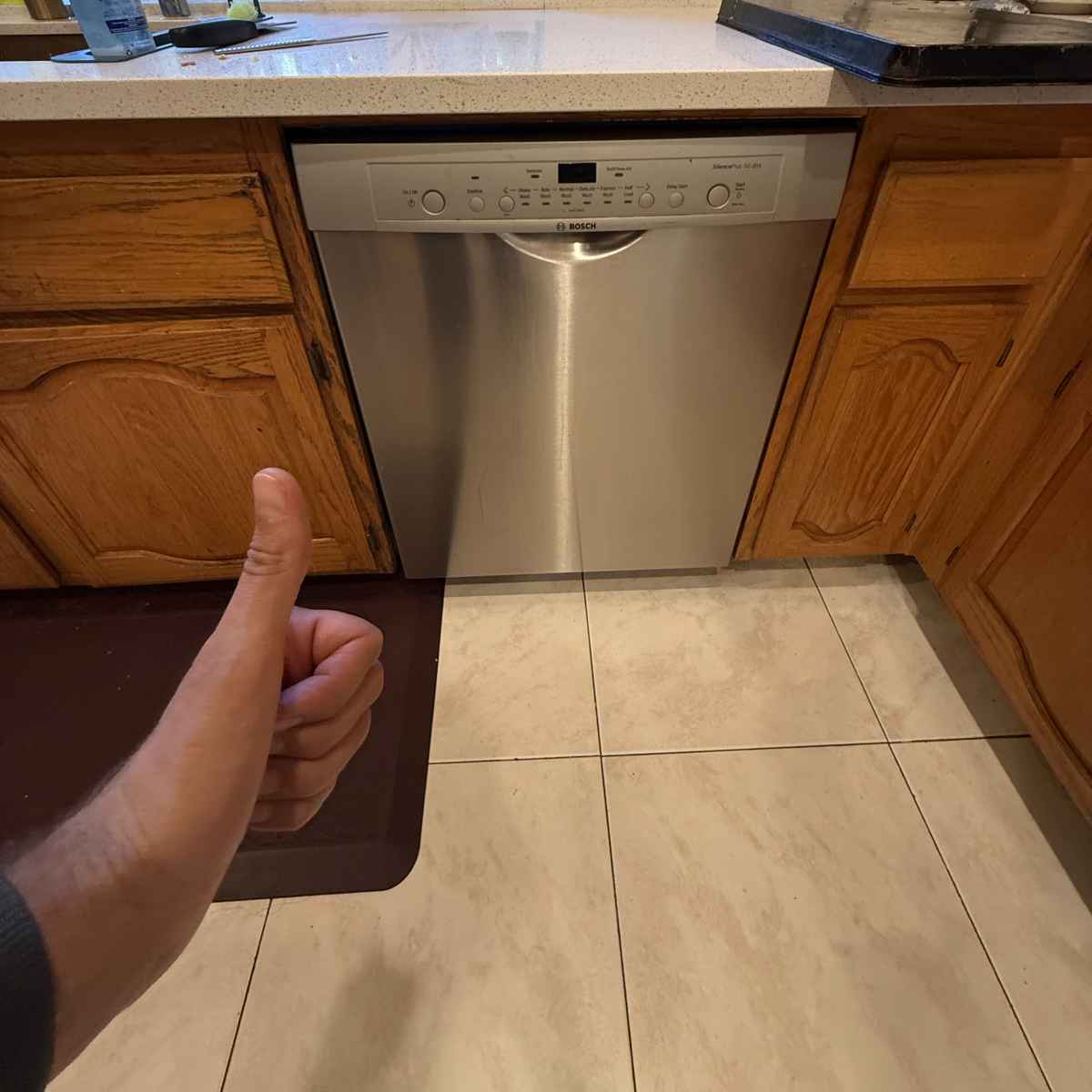
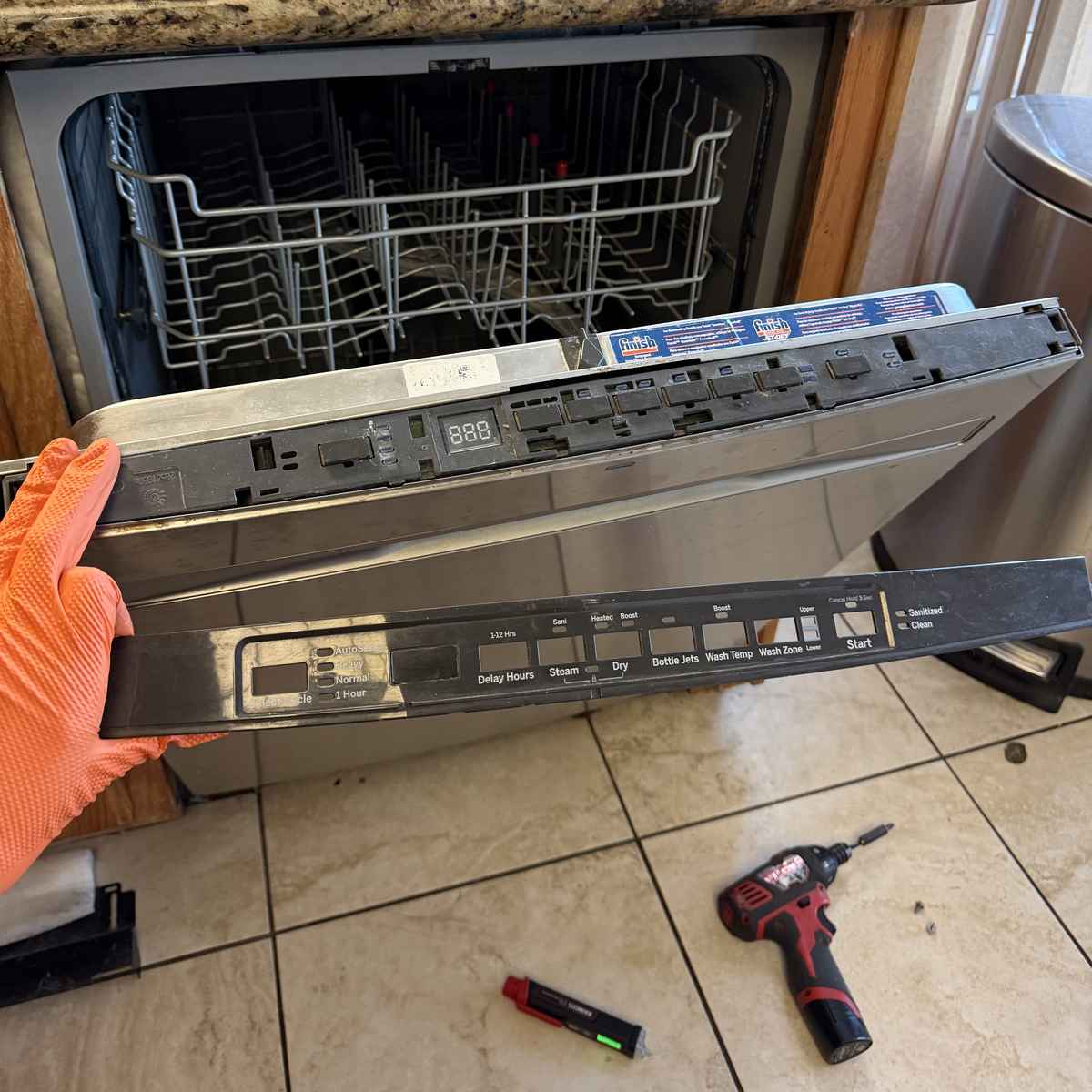
5. Racks Rusting or Falling Apart
Vinyl coating on the dish racks wears through over years of hot water and detergent exposure. Once metal is exposed, rust spreads quickly, chips fall into the wash, and the wheels (rack rollers) break.
Signs: Visible rust spots on tines; racks sag or wobble; rollers missing or broken; dishes tumble mid-cycle.
What to do: For minor rust, a vinyl rack-repair kit ($15 on Amazon) covers exposed metal. For major damage or broken rollers, replacement racks are available from the brand's parts distributor — not cheap, but extend the machine's usable life by years.
Typical cost: DIY vinyl touch-up kit: $15–$30. Replacement rack (upper or lower): $160–$340 depending on brand.
6. Cloudy Glasses or White Film on Dishes
Two different causes, two very different fixes. Hard water scale leaves a white mineral film — common in San Diego where water hardness runs high. Etching (permanent cloudiness you can't wipe off) is caused by too much detergent on soft water, or glass that's already being etched. Test by soaking a cloudy glass in white vinegar for 30 minutes — if it clears, it's hard-water scale.
Signs: Uniform film on all glasses = hard water. Rainbow iridescence or cloudy patches on specific glasses = etching. Film that wipes off easily = rinse aid depletion.
What to do: Refill the rinse-aid compartment (most users don't). Run a cleaning cycle with dishwasher citric-acid descaler every 2-3 months. If etching is confirmed, cut the detergent dose in half.
Typical cost: Rinse aid and descaler: $10–$20 at Target or Home Depot. This is a maintenance issue, not an appliance repair.
7. Error Codes on the Control Panel
Every brand uses different codes, but the most common ones on Bosch (E15 = water in base pan), Samsung (LE = leak detected, 4E = water supply), Whirlpool/KitchenAid (F2, F6 = control board), and LG (IE = inlet issue) all indicate a specific fault location.
Signs: Flashing light pattern on panel; specific code displayed; unit won't start cycle or stops partway through.
What to do: Look up the exact code in your manual or brand's website. Some codes (like Bosch E15) are resolved by draining the base pan and drying thoroughly; others require a specific part replacement. If the code returns after one reset, it's time to call a technician.
Typical cost: Diagnostic to resolve code: flat $90 service call, credited to the repair. Part cost varies widely — ask for a quote before you authorize work.
"Probably half the 'dishwasher won't drain' calls I go on are a garbage-disposal plug that never got knocked out during install," says Yurii. "Takes two minutes to fix. The harder calls are usually Bosch E15 or a stuck door latch — those I'll handle same day, but the install mistake is free five minutes of my time."
Dishwasher Repair in San Diego
Spark Appliance Repair provides same-day dishwasher repair across San Diego County. Our in-house team of four technicians services all major brands — Bosch, Miele, KitchenAid, Whirlpool, Samsung, LG, GE, Kenmore, Fisher & Paykel, and Frigidaire.
We're licensed and insured by the California Bureau of Household Goods and Services (Registration #C 62399). Built-in and portable dishwashers both — including Fisher & Paykel DishDrawer dual-drawer units that many shops decline. Flat $90 diagnostic fee credited to the repair, plus a 90-day warranty on parts and labor on every service. The 90-day warranty covers any return visit if the same fault recurs.
We serve Chula Vista, La Mesa, El Cajon, Coronado, Del Mar, La Jolla, Mira Mesa, Poway, Spring Valley, and the greater San Diego area from our Spring Valley HQ at 2637 Summitview Ln.


