
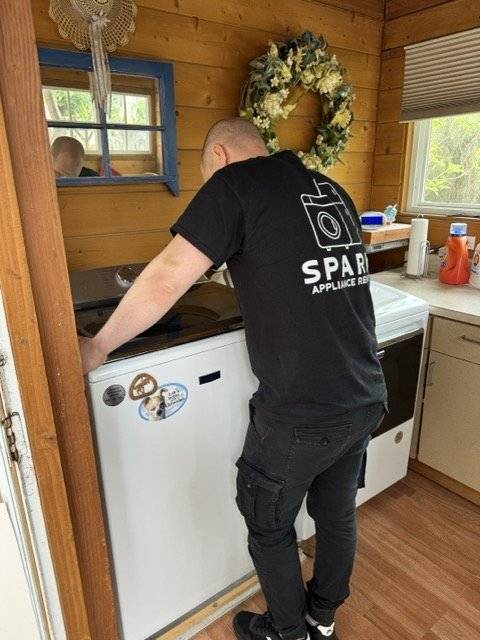
You open the washing machine expecting clean clothes — and instead find them sitting in a tub full of murky water. A washer that won’t drain is one of the most common appliance complaints Yurii handles at Spark Appliance Repair — he sees it multiple times a week across San Diego County. The good news: the cause is usually identifiable, and often fixable without replacing the entire machine.
Here are the six most common reasons a washing machine won’t drain, plus what you can do about each.
1. Clogged Drain Pump Filter
Most front-loading washers and many top-loaders have a drain pump filter (also called a lint filter or coin trap) that catches debris before it reaches the pump. Over time, this filter can become clogged with lint, coins, hair ties, and other small items — blocking drainage entirely.
How to check it: On most front-loaders, the filter is behind a small access panel at the bottom front of the machine. Place a towel and a shallow pan underneath before opening it — water will likely spill out. Unscrew the cap, remove the filter, clean it thoroughly, and replace it.
This fix is free and takes about 10 minutes. We recommend cleaning the filter every 3–6 months as routine maintenance.
2. Clogged or Kinked Drain Hose
The drain hose carries water from the washer to your standpipe or utility sink. If the hose is kinked, bent, or clogged with lint buildup, water can’t flow out properly.
What to check: Pull the washer away from the wall and visually inspect the hose for kinks or sharp bends. Disconnect the hose and check for blockages inside. Make sure the hose isn’t inserted too far into the standpipe — it should go in 6–8 inches, not all the way.
What to do: Straighten any kinks and clear any clogs. If the hose is damaged, replacement hoses are inexpensive (under $20) and easy to install.
3. Failed Drain Pump
If the filter and hose are clear but the washer still won’t drain, the drain pump itself may have failed. The pump is responsible for actively forcing water out of the drum. If the pump motor has burned out or a foreign object (like a sock or small garment) is jammed in the impeller, it won’t work.
Signs of a failing pump: You may hear a humming or buzzing noise during the drain cycle but no water movement. Sometimes the drum will spin but drainage doesn’t occur.
What to do: This repair requires accessing the pump — typically located at the bottom of the machine — and either clearing the obstruction or replacing the unit. Drain pump replacement typically costs $150–$250 including parts and labor.
4. Faulty Lid Switch or Door Latch
On top-loading washers, the lid switch is a safety mechanism that prevents the machine from spinning (and draining) when the lid is open. If the switch fails, the washer may think the lid is always open — and refuse to drain or spin.
On front-loaders, a faulty door latch can have the same effect.
How to test: For a top-loader, open the lid and press the lid switch manually with a pen or finger while starting the drain cycle. If it drains, the switch has likely failed.
What to do: Lid switch replacement is a fairly affordable repair — usually $100–$180 with labor.
5. Blocked Standpipe or Household Drain
Sometimes the problem isn’t the washer at all — it’s the drain that the washer empties into. If your home’s standpipe or utility drain is clogged, the water has nowhere to go and will back up into the tub.
How to check: Run water directly down the standpipe from a bucket. If it drains slowly or backs up, the blockage is in your plumbing — not the washer.
What to do: A drain clog is a plumbing issue, not an appliance repair issue. You’ll want to call a plumber or use a drain snake to clear the blockage.
6. Control Board or Timer Failure
In more complex cases — especially in newer electronic washers — a faulty control board or timer can prevent the machine from advancing to the drain and spin cycle at all. The machine may stop mid-cycle with water still in the drum.
Signs: The washer stops at the same point in the cycle every time. Other cycles may or may not work correctly.
What to do: Diagnosing a control board issue requires a technician with the right test equipment. Replacement boards can cost $150–$300, so it’s worth getting a professional assessment before ordering parts.
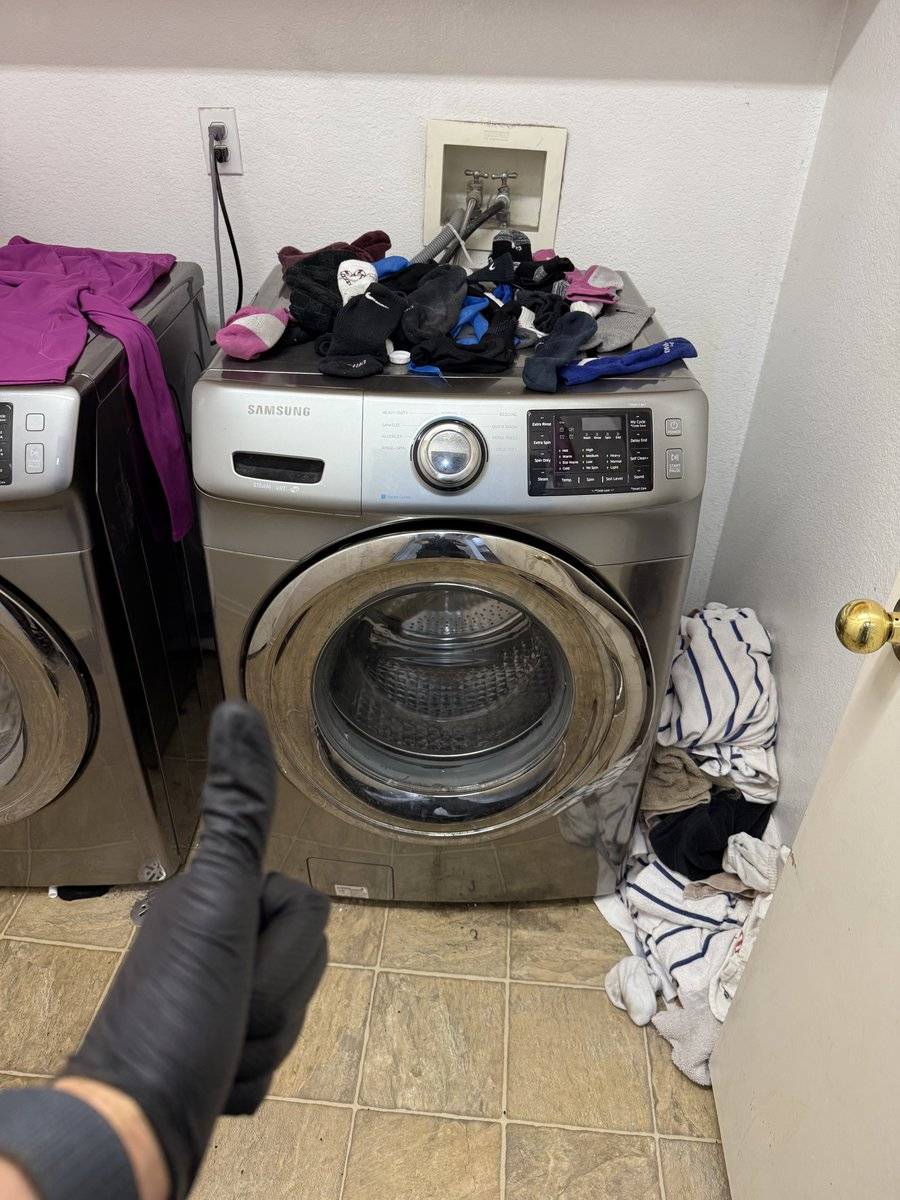
When to Call a Repair Technician
If cleaning the filter and checking the hose doesn’t solve the problem, it’s time to call a professional. “About 40% of the drain calls I get are just a clogged filter,” says Yurii. “Five minutes of cleaning and the machine is back to normal. But if it’s the pump, you’ll need a part — don’t let it sit, standing water damages the drum bearings over time.”
Washer Repair in San Diego
Spark Appliance Repair provides fast, same-day washing machine repair throughout San Diego County. We work on all major brands — Samsung, LG, Whirlpool, Maytag, GE, Bosch, and more — and we’ll give you an honest assessment of whether repair or replacement is the better move.
Call (619) 330-5105 or schedule online. We serve Chula Vista, La Mesa, El Cajon, Mira Mesa, Coronado, Spring Valley, and the entire San Diego area.


