
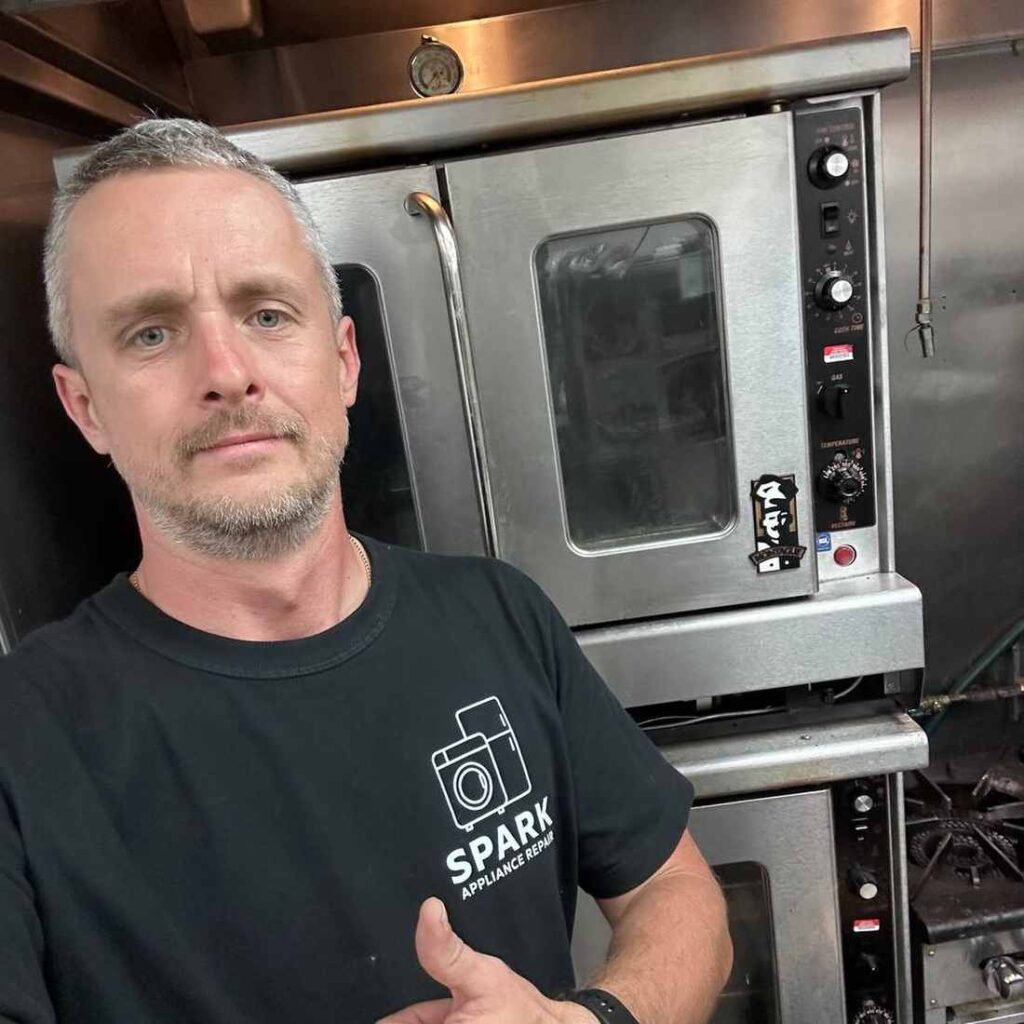
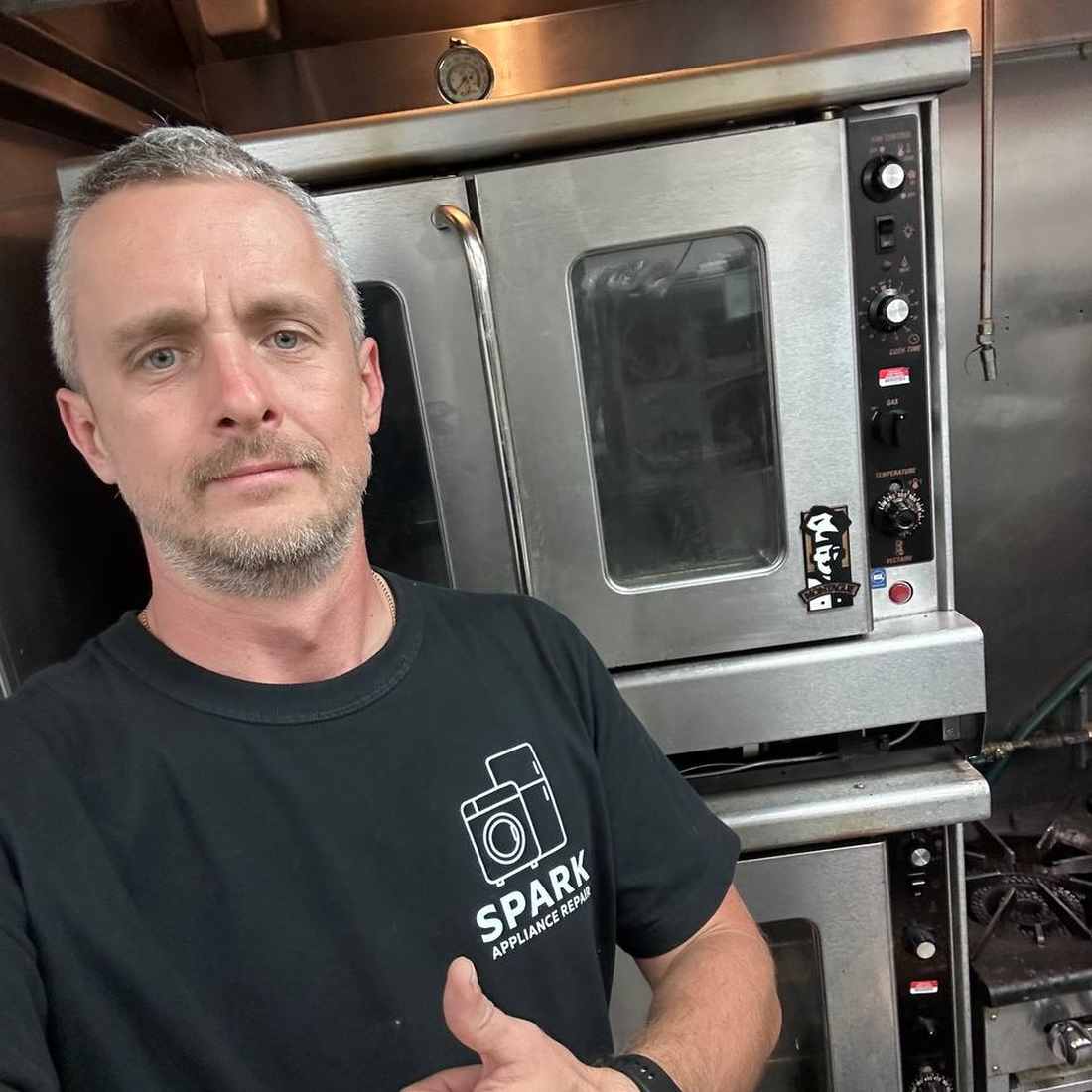
A commercial convection oven earns its keep by baking evenly, rack after rack — until a worn blower or a drifting thermostat turns every batch into a guessing game. This guide walks the gas-convection failures we see most on San Diego service calls (Vulcan, Garland, Blodgett and the rest), the checks your staff can run before the first bake, and the gas-safety symptoms you should never cook through.
1. Uneven Baking and Hot Spots — the Blower and Airflow
What You’re Seeing
A convection oven bakes evenly because a blower fan circulates the heat. When the fan motor or its bearing wears, the fan slows, wobbles or runs at the wrong speed, and you get hot spots, burnt edges and a raw center. Just as often the airflow is blocked — sheet pans packed edge to edge, or racks overloaded so air cannot move.
On-Site Check (Staff)
Run the oven empty at 350°F and listen at the back: the fan should spin smoothly with no whine or wobble. When you load, leave space between pans and do not cover more than about two-thirds of each rack. Rotate a test tray to confirm the unevenness follows the oven, not the recipe.
When to Call a Tech
Call us if: The fan bearing whines or wobbles, the motor will not reach speed, or a two-speed selector is not switching — the blower motor or bearing needs replacement, not adjustment.
2. Won’t Reach or Hold Temperature
What You’re Seeing
If the oven runs hot or cold against the dial, the thermostat or temperature sensor has usually drifted, the gas valve is not modulating correctly, or a leaking door is bleeding heat. Calibration also drifts naturally over a few years of hard service.
On-Site Check (Staff)
Put an oven thermometer on the center rack, set 350°F, and give it a full 20-minute soak before you compare. Check the door seal at the same time — a gap there will read as ‘won’t hold temp.’ Many ovens allow a calibration offset; if it will not hold, the sensor or thermostat is the issue.
When to Call a Tech
Call us if: It is off by more than 25°F after recalibration, the sensor reads open, or the modulating gas valve is faulting — these are part replacements with the oven’s OEM components.
3. Burner Won’t Light or Pilot Won’t Hold (Gas) — Safety
What You’re Seeing
Gas convection ovens prove flame with a thermocouple or flame sensor before the safety valve stays open. A weak thermocouple, a dirty pilot, or a failing igniter means the burner will not light — or worse, gas is admitted without lighting. Any gas smell before flame is a stop signal.
On-Site Check (Staff)
Confirm the gas supply is on and the pilot is lit; relight the pilot per the control-panel instructions. Never keep running an oven that smells of gas before it lights — shut the gas off at the unit and ventilate the area.
When to Call a Tech
Call us if: Always, for a gas issue: the pilot will not stay lit (thermocouple), the igniter will not glow, or you smell gas — this is a licensed-tech safety call the same day, not a maintenance item.
Down Equipment? Call Spark Appliance Repair
When commercial equipment goes down, every hour is lost service. Spark Appliance Repair is licensed and insured (California BHGS Registration #C 62399), EPA 608 Type I certified, and offers same-day service across San Diego County for calls received before noon, backed by a 90-day parts and labor warranty.
4. Door Won’t Seal or Won’t Stay Closed
What You’re Seeing
The door gasket seals heat in and the door switch cuts the fan when you open it. A hardened or torn gasket, a sagging door, or a worn spring/chain lets heat leak — which shows up as uneven bakes, longer cook times and a higher gas bill, all at once.
On-Site Check (Staff)
Run a paper test around the gasket: it should grip a sheet of paper all the way around. The door should self-close from a slight angle, and the fan should stop the moment you open it. Inspect the gasket for cracks and the hinge for sag.
When to Call a Tech
Call us if: The gasket is torn or hardened, the door sags or will not self-close, a spring or chain is broken, or the door switch no longer cuts the fan — all door-hardware repairs.
5. Commercial Convection Oven Maintenance Schedule
Convection ovens reward a little routine attention with years of even baking. The gap between a 15-year oven and a 5-year one is mostly the blower area, the door seal and the burner — keep these on a schedule:
Daily
- Wipe the interior and door gasket once cool
- Clear crumbs and grease from the fan and blower area
- Confirm the pilot or igniter lights cleanly with a steady blue flame
Weekly
- Clean around the blower and check the fan spins freely
- Run a thermometer check and recalibrate if off
- Inspect the door seal, latch and self-close
Quarterly / Semi-annual
- Professional service: burner and pilot, gas pressure, fan-motor bearings
- Thermostat calibration and door hardware
- Verify hood clearances and that gas connections are tight
Related Spark Pages
- Commercial Appliance Repair San Diego
- Oven Repair San Diego
- Commercial Dishwasher Repair San Diego
- 6 Signs Your Oven Needs Repair
- Commercial Ice Machine Repair
Frequently Asked Questions
How long should a commercial convection oven last?
Why does my commercial convection oven bake unevenly?
Is it safe to keep using a gas convection oven that won’t light or smells of gas?
How often should a commercial convection oven be serviced?
Do you service Vulcan, Garland, and Blodgett convection ovens?
Ready to Schedule San Diego Commercial Service?
Spark Appliance Repair — Spring Valley HQ, family-owned, licensed and insured, EPA 608 certified, same-day service, 90-day warranty on parts and labor.


