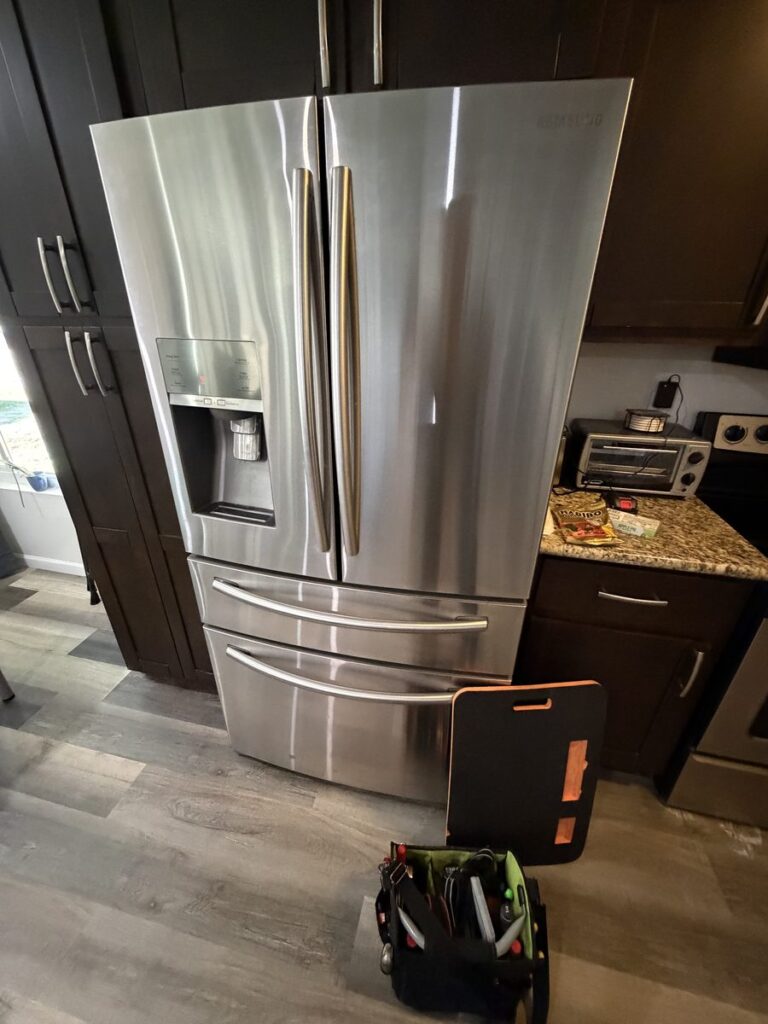
Four different failures, four different fixes — find yours below and know in minutes whether it’s a five-minute fix or a job for a technician.
Samsung ice maker problems all end the same way — an empty glass — but they don’t all start the same way. A frozen-over ice room, an ice maker that quit entirely, a tray that drops six tiny cubes a day, and a full bucket that won’t dispense are four different failures with four different fixes. Instead of one long checklist, this guide is organized by symptom.
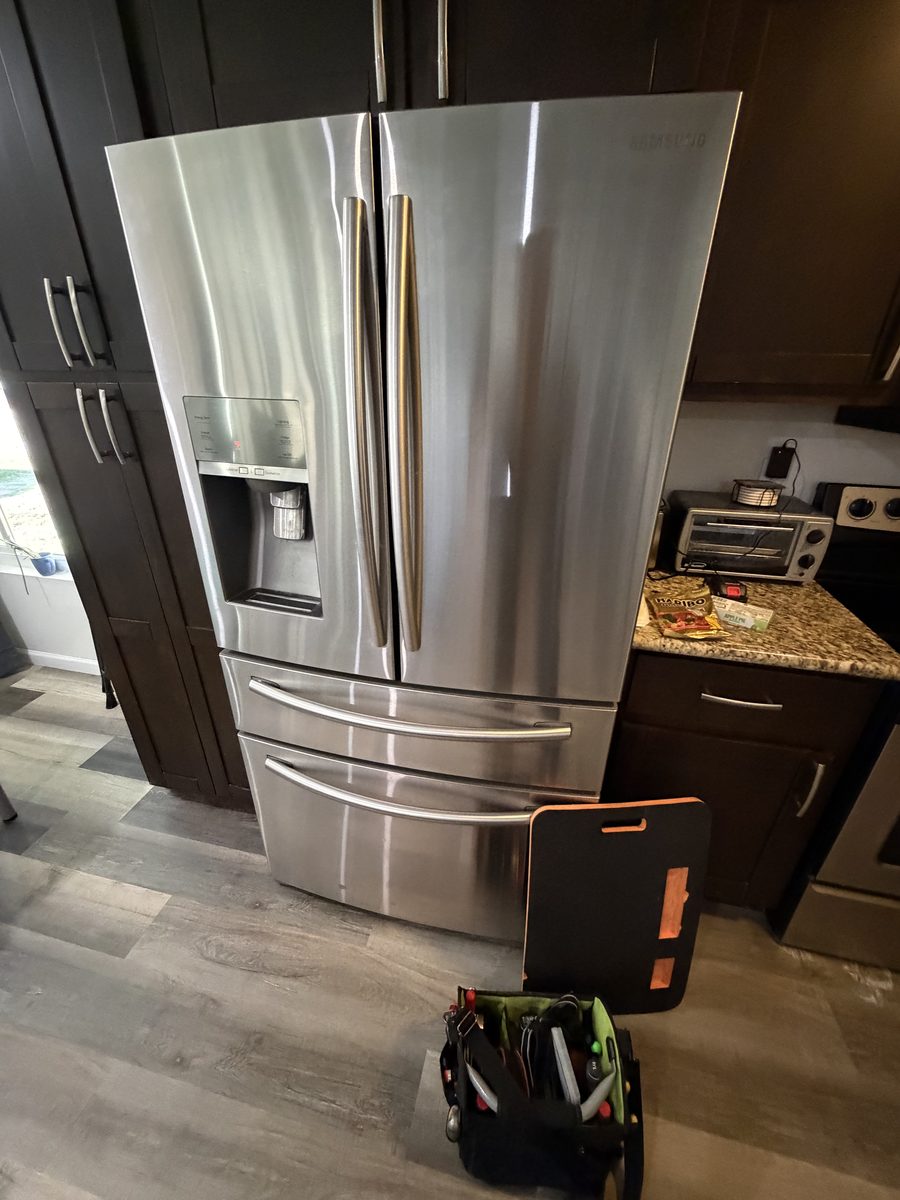
Pick your symptom
BNo ice at allThe bucket is empty and stays empty
CSlow ice, small or hollow cubesIt works, but never keeps up
DIce in the bucket, won’t dispenseProduction is fine — delivery is the problem
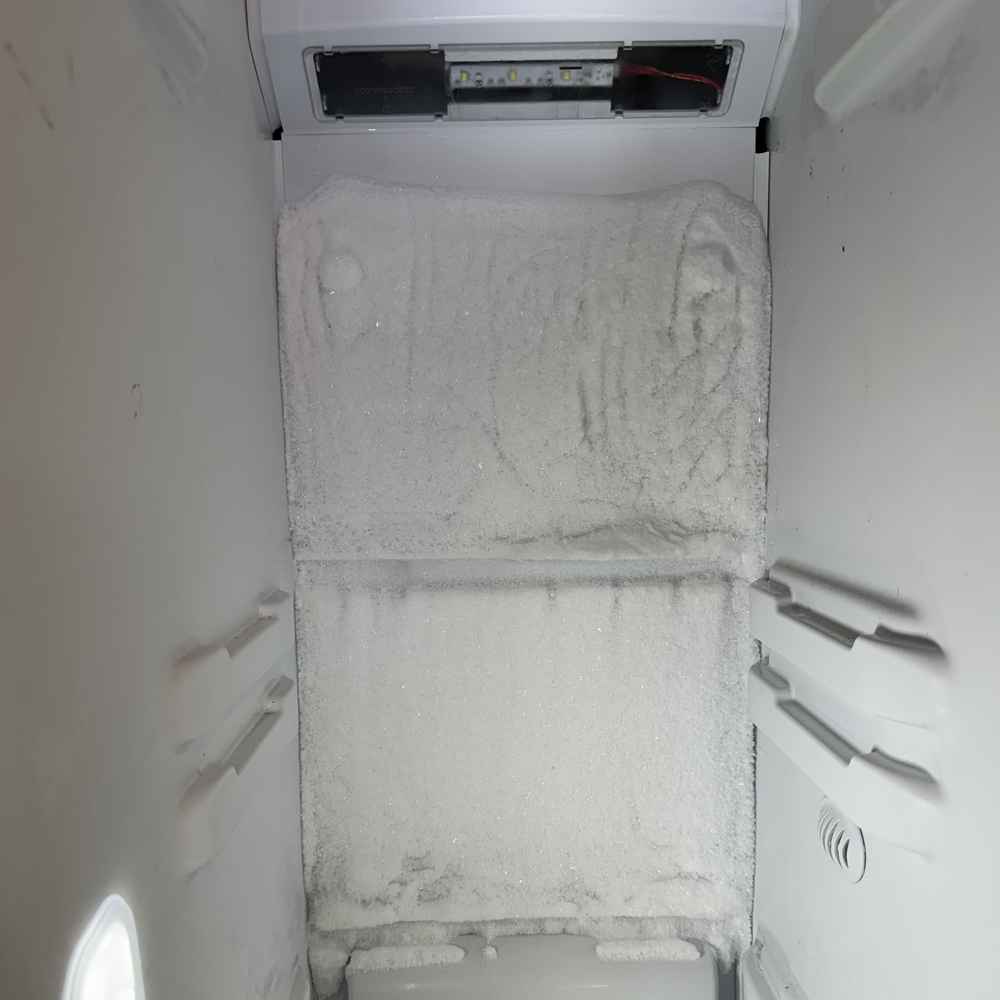
A. Ice maker frozen solid or iced over
This is the signature Samsung complaint, and it’s most common on French-door models where the ice maker sits inside the refrigerator compartment rather than the freezer. The ice room has to stay well below freezing while surrounded by a much warmer fridge — and when humid air sneaks past the compartment’s seal, it turns to frost the moment it hits that cold pocket. Frost coats the fan, the tray, and the auger until the whole assembly seizes. You may hear the fan clicking against ice before production stops entirely. Owners of 2014–2018 French-door models (many RF23, RF26, RF28, and RF263 units) see this most; a class-action lawsuit over freezing ice makers in these models was dismissed in late 2023 after individual claims were resolved, and there has been no recall.
What you can safely do
- Defrost it properly. Empty the bucket, switch the ice maker off, and let the ice room thaw — either with the fridge powered down and towels laid in (allow several hours), or using your model’s forced-defrost function if you’re comfortable with the control-panel sequence for your model.
- After thawing, press and hold the reset/test button on the ice maker until it chimes and confirm it runs a cycle.
What a technician does
Defrosting alone treats the symptom — the frost comes back in weeks if the air leak stays. A technician removes the ice maker, steams the ice room clear, then seals the air paths that let humid air in; Samsung issued an updated sealing kit for exactly this failure, and installing it correctly is the difference between a fix and a repeat visit. We handle this repair routinely as part of our San Diego ice maker repair service, and the work is covered by our 90-day warranty on parts and labor.
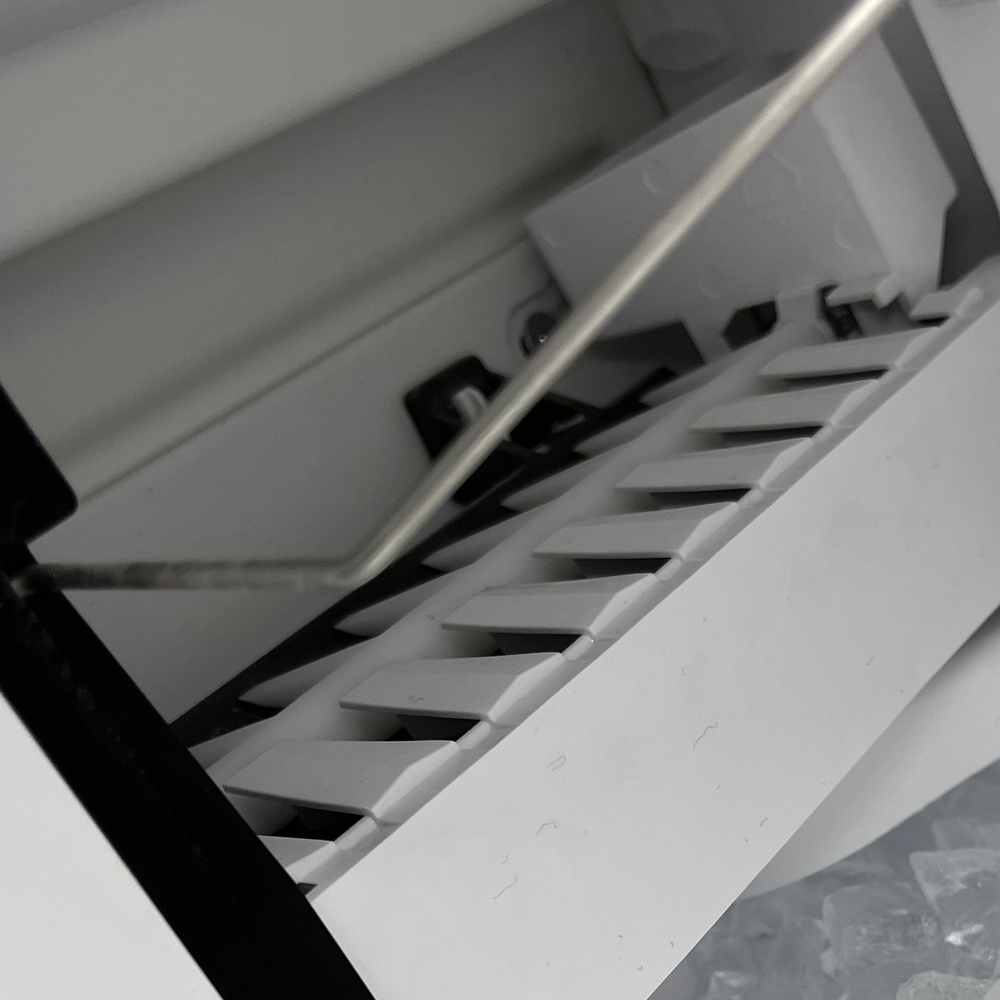
B. No ice at all
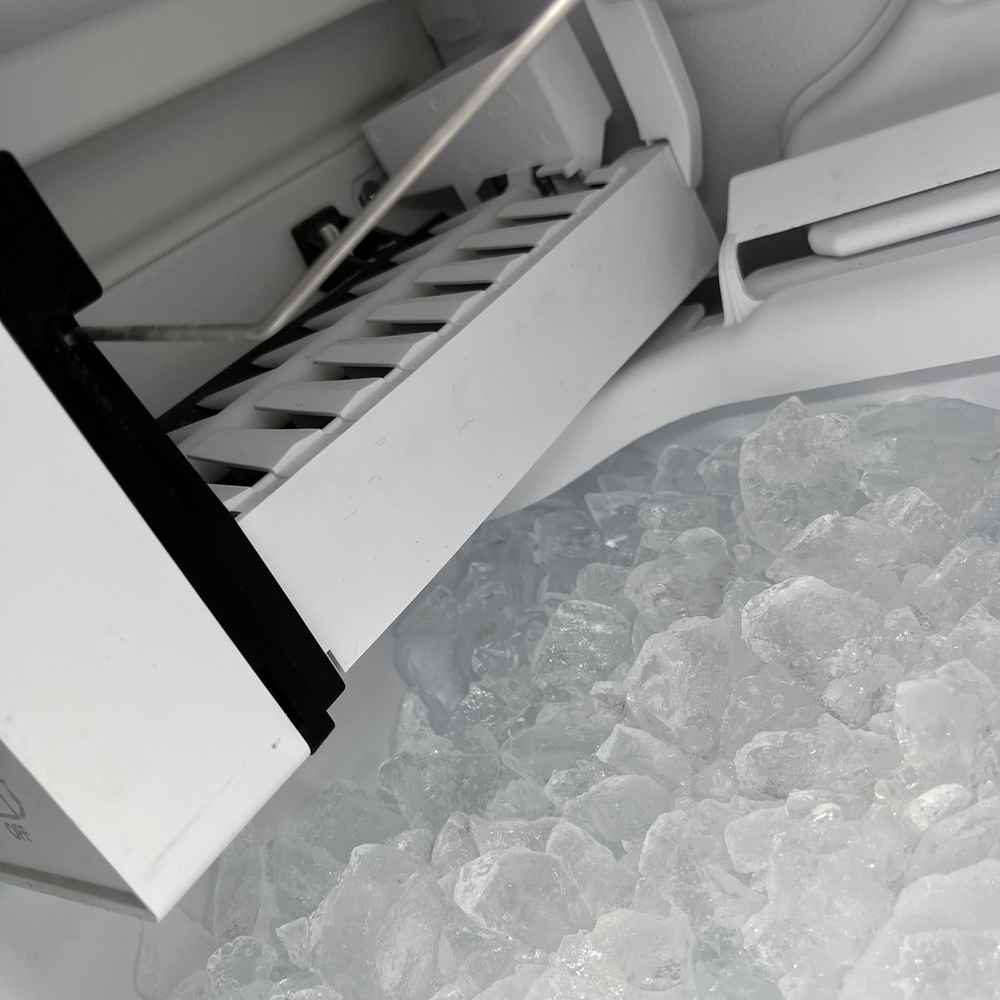
If the bucket is simply empty and stays empty, work from the cheapest possibility to the most serious: a paused ice maker, no water reaching it, or a failed ice maker assembly.
What you can safely do
- Check the display for “Ice Off.” It’s the most common non-repair we see — the function gets toggled accidentally or after a power blip.
- Re-seat the bucket. If the bin isn’t fully clicked in, many models stop production.
- Run the test cycle. Hold the reset/test button on the ice maker until it chimes. If it hums and cycles but no water enters the tray, the problem is water supply, not the ice maker itself.
- Test the water side. Dispense water into a measuring cup for 10 seconds — you should get about 3/4 cup. Less than that points to a clogged filter, a kinked supply line behind the fridge, or household pressure below the 20 psi the valve needs.
- Swap or bypass the filter. A filter past its 6-month life can choke flow enough to stop ice production while the water dispenser still limps along.
What a technician does
With water supply confirmed, the suspects narrow to the water inlet valve (a solenoid that opens for only a few seconds per fill — when its screen scales up or the coil fails, the tray never fills), a frozen fill tube, or the ice maker assembly and its sensor. If the panel is flashing an error code, note it before you call — it shortens the diagnosis. And if the fridge section itself isn’t holding temperature, the ice maker is the messenger, not the problem: that’s refrigerator repair territory, and worth addressing before food spoils.
Ice maker still down after the checks?
Same-day service available across San Diego County — call before noon. $90 service call, credited toward the repair.
C. Slow ice, small cubes, or hollow cubes
An ice maker that still works but underdelivers is almost always a water-volume story. Each fill is brief, so anything that slows the flow — a tired filter, a scaled-up valve, low pressure — means less water in the tray, which freezes into small, hollow, or shattered cubes and a bucket that never quite fills.
What you can safely do
- Replace the water filter if it’s older than six months, and repeat the 10-second / 3/4-cup dispenser test before and after.
- Check your water source. If the fridge is fed from a reverse-osmosis system, its output pressure often sits below the 20 psi minimum — a common hidden cause of chronically slow ice.
- Give it airflow and time. A packed-full fridge and frequent door openings warm the ice room and stretch freeze times; production also normally takes about 24 hours to stabilize after any reset or defrost.
What a technician does
Persistent slow ice after a fresh filter usually means mineral scale inside the inlet valve or a fill tube that’s partially frozen. A technician measures actual flow at the valve, replaces it if it’s restricted, and checks that the ice room is holding the right temperature rather than cycling warm.
D. Ice in the bucket, but nothing dispenses
Production is fine — delivery is the problem. Three things stand between the bucket and your glass: loose ice, a working auger to push it, and a clear chute with a flap that seals shut afterward.
What you can safely do
- Dump and inspect the bucket. Ice that sits unused slowly melts and refreezes into a single fused block during the fridge’s normal defrost cycles. If the bucket is one solid clump, empty it, wash and dry it, and let a fresh batch build — and use ice more often to keep it loose.
- Listen at the paddle. Press for ice and listen: a hum with no movement suggests a jammed or failing auger motor; total silence points to the dispenser switch or control side.
- Check the chute flap. Look up into the dispenser chute — if the little flap is stuck open on a chip of ice, warm moist air flows into the ice compartment continuously, which both clumps the bucket and feeds the frost problem in symptom A.
What a technician does
A technician tests the auger motor directly, checks the dispenser actuator and micro-switch, and replaces the flap or bucket assembly when the seal no longer closes flush. On some models the flap is part of the bucket, so what looks like a “broken door” is actually a bucket replacement — quick, but worth doing with the right part the first time.
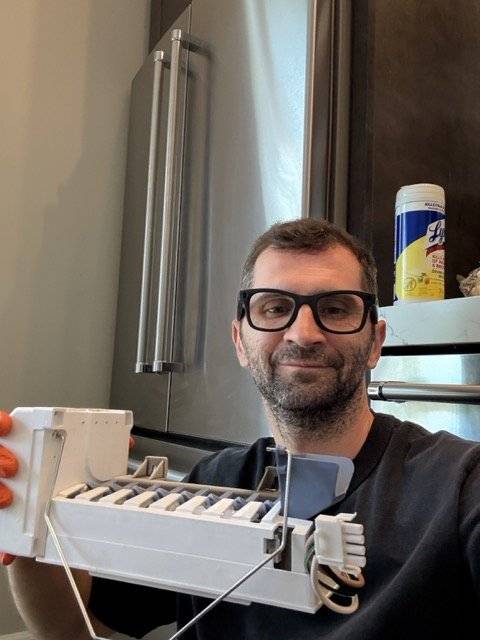
What a repair visit looks like
A licensed and insured technician arrives with the common Samsung ice maker parts on the truck — inlet valves, auger motors, ice maker assemblies, and sealing kits. You pay a $90 service call, credited toward the repair when you go ahead with the work — so the diagnosis effectively costs nothing if we fix it. Every repair comes with a 90-day warranty on parts and labor. We work on all Samsung refrigerator families as part of our Samsung appliance repair service in San Diego.
Frequently Asked Questions
Why did my Samsung ice maker stop making ice?
The most frequent causes are an iced-over ice room (especially on French-door models with the ice maker in the fridge compartment), the Ice Off setting toggled by accident, a clogged water filter, low water pressure, or a failed water inlet valve. Matching your exact symptom — frozen, no ice, slow ice, or not dispensing — narrows it to one or two likely parts.
How do I defrost a frozen Samsung ice maker?
Empty the bucket, switch the ice maker off, and let the compartment thaw naturally with towels in place, or use your model’s forced-defrost function. Never point a hair dryer or heat gun at it — the heat warps the plastic liner and tray. If frost keeps returning after each defrost, air is leaking into the ice room and the compartment needs to be professionally resealed.
Why are my Samsung ice cubes small, hollow, or crushed-looking?
Small or hollow cubes mean the tray isn’t getting enough water per fill. The usual suspects are a water filter past its 6-month life, household or reverse-osmosis water pressure below the 20 psi minimum, or mineral scale restricting the water inlet valve — a common issue with San Diego’s hard water.
Why does my Samsung ice maker keep freezing up over and over?
Repeat freeze-ups on fridge-compartment ice makers are usually caused by warm, humid air leaking into the ice room past the compartment seal, or through a dispenser chute flap that no longer closes flush. Defrosting clears it temporarily; sealing the air leak — Samsung issued an updated sealing kit for this — is the lasting fix.
How much does Samsung ice maker repair cost in San Diego?
Spark charges a $90 service call that is credited toward the repair if you proceed, so diagnosis costs nothing when we do the work. Simple fixes like a valve or reseal are inexpensive; an ice maker assembly replacement costs more. Every repair is backed by a 90-day warranty on parts and labor.
Can you fix my Samsung ice maker the same day?
Yes — same-day service is available across San Diego County when you call before noon. Our licensed and insured technicians stock common Samsung ice maker parts on the truck. Call (619) 330-5105 or book online.
Want your ice back today?
Same-day service available across San Diego County — call before noon and we can usually have a technician at your door the same day. The $90 service call is credited toward your repair, and the work is backed by a 90-day warranty on parts and labor.