A fridge doesn’t “make” cold — it pumps heat out through five stations. Follow the loop, match your symptom, and you’ll know which station failed before anyone opens a panel.
When an LG refrigerator stops cooling, the fastest way to find the problem is to follow the path the cold takes. A fridge doesn’t “make” cold — it pumps heat out of the box through a loop of five stations: compressor, condenser, evaporator and its defrost system, the fans and damper that move chilled air, and the control board conducting it all. Each station fails with its own fingerprint. Below we walk the loop station by station — the symptoms that point there, what you can safely check, and what’s a technician’s job.
First, read the symptom: both sections warm, or just the fridge?
Before touring the system, note which compartments are affected — it cuts the suspect list in half:
- Freezer AND fridge both warm (ice cream soft, everything thawing): suspect the heat-pumping side — compressor, condenser, or a sealed-system fault. Start at Station 1.
- Freezer fine, fridge warm — the classic LG complaint: cold is being made but not delivered. That’s an airflow or defrost problem — evaporator fan, frosted-over coils, or a stuck damper. Skip to Stations 3 and 4.
Two minutes of quick checks first: confirm the temperature settings, make sure the fridge isn’t in demo/display mode after a power blip, test that door gaskets seal tight (a closed dollar bill should resist a tug), and clear anything blocking the interior air vents — overstuffed shelves against the back wall cause more “not cooling” calls than you’d think.
Pick your station
BCondenser & coilsStation 2 — where the heat gets dumped, and the free DIY fix
CEvaporator, defrost & airflowStations 3–4 — freezer fine, fridge warm
DControls & sensorsStation 5 — erratic cooling and error codes
Station 1: The compressor — the pump that moves the heat
The compressor at the back-bottom of the unit pressurizes refrigerant and pushes it through the loop. No compression, no cooling — anywhere.
Symptoms that point here: both compartments warming at once; the unit sounds like it’s running but food keeps getting warmer; repeated clicking every few minutes (trying and failing to start); or a fridge that went from fine to fully warm within about a day.
What you can check: feel near the back for vibration or warmth from the compressor area, and listen for the click-pause-click cycle. That’s as far as DIY goes.
What only a tech can do: measure compressor windings, test the start components, and check refrigerant pressures. Sealed-system work — anything that opens the refrigerant loop — legally requires EPA 608 certification, so a compressor replacement is never a DIY job.
LG linear compressor: what owners should know
Many LG refrigerators built since the mid-2010s use LG’s linear compressor — an efficient, quiet piston design with a documented history of early failures on some model years. The telltale pattern: the fridge is only a few years old, it hums or clicks like it’s working, and both compartments go warm within a day or two. LG settled a class-action lawsuit in 2020 over cooling failures in certain 2014–2017 models; more useful to you today is the warranty that came with your fridge.
Station 2: The condenser — where the heat gets dumped
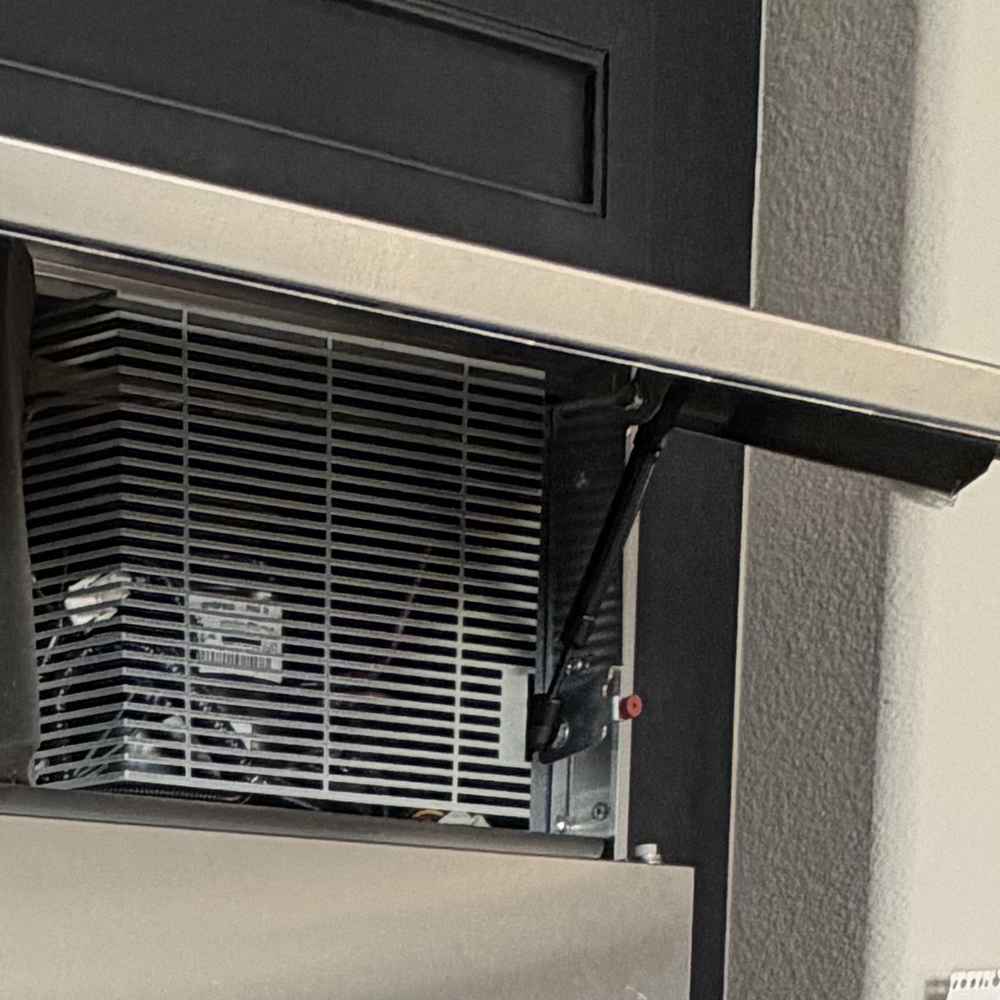
Hot, compressed refrigerant flows through the condenser coils (under or behind the fridge), where a small fan blows the heat into your kitchen. If that heat can’t escape, cooling drops off across both compartments.
Symptoms that point here: gradual decline rather than sudden failure; both sections a little too warm; the compressor running hot and long.
What you can check: unplug the fridge, pull it out, and look at the coils underneath — a mat of dust and pet hair acts like a blanket. Vacuum the coils and confirm the condenser fan spins freely. It’s free, genuinely DIY, and fixes a surprising share of “slowly getting warmer” complaints.
What only a tech can do: replace a dead condenser fan motor or diagnose a restriction inside the sealed loop.
Station 3: The evaporator and defrost system — where the cold is made
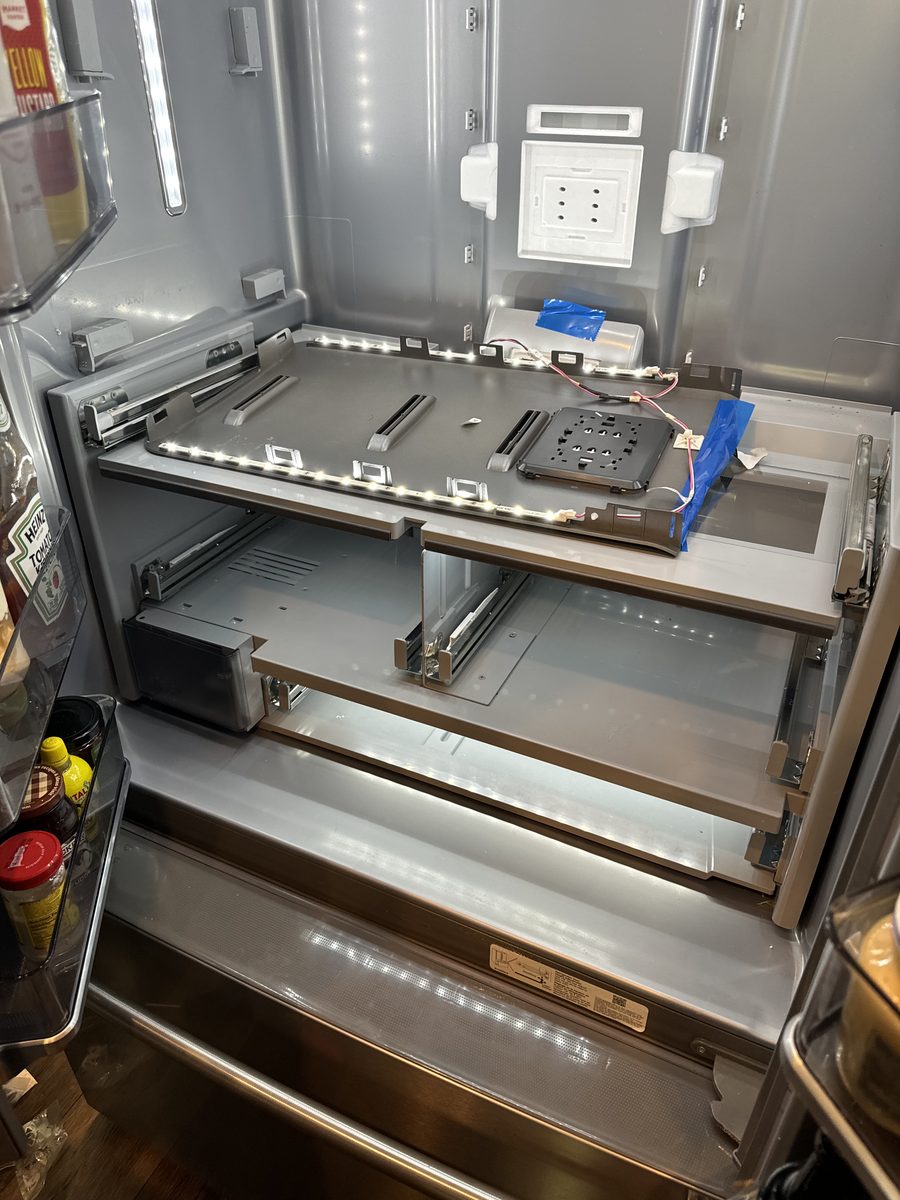
Behind the freezer’s back panel, the evaporator coil gets bitterly cold as refrigerant absorbs heat. Several times a day a defrost heater melts the frost that naturally builds on the coil. When the defrost system fails — heater, defrost sensor, or the control that triggers it — frost keeps accumulating until the coil becomes a solid block of ice that air can’t pass through.
Symptoms that point here: freezer still works but the fridge warmed over several days; frost creeping up the freezer’s back wall; a fan that whirs, then scrapes, then goes silent as ice reaches the blades.
What you can check: heavy frost on the freezer’s back panel is the classic signature. A full manual defrost (food out, unit unplugged, door open, towels down, 24 hours) usually brings cooling back temporarily — but be clear about what that means: if defrosting fixes it, the defrost system is broken and the ice will return in one to three weeks. Use the thaw as a diagnosis, not a cure.
What only a tech can do: test the defrost heater and sensor with a meter, pull the evaporator cover safely, and replace the failed component so the ice stays gone. Every repair we make is backed by a 90-day warranty on parts and labor.
Station 4: Airflow and the damper — how cold reaches the fridge
This is the LG anatomy behind the “freezer fine, fridge warm” mystery: on most models, one evaporator chills the freezer, and an evaporator fan pushes that cold air through a motorized damper — a small automatic door — into the fresh-food section. If the fan dies or the damper sticks or freezes shut, the freezer stays perfectly cold while the fridge drifts into the 50s.
Symptoms that point here: fridge warm, freezer normal; no airflow at the fresh-food vents; the familiar fan noise gone quiet — or the opposite, a new grinding sound as the blade clips ice.
What you can check: open the fridge door, hold the door switch pressed, and feel for air moving at the vents. Nothing moving means fan, ice, or damper. If a manual defrost restores airflow, the root cause is back at Station 3.
What only a tech can do: replace the evaporator fan motor or damper assembly — cabinet-disassembly jobs where forcing a frozen part cracks expensive plastic housings.
Found your station — or still guessing?
Same-day LG cooling diagnosis across San Diego County — call before noon. $90 service call, credited toward the repair.
Station 5: The control board and sensors — the conductor
The main board decides when the compressor runs, when defrost fires, and how far the damper opens, using thermistor readings around the cabinet. A failed sensor feeds the board bad information; a failed board gives good parts bad orders.
Symptoms that point here: erratic behavior — cooling that comes and goes, the fridge running non-stop or barely at all, or an error code on the display (an Er FF code, for example, points at the evaporator fan circuit).
What you can check: note any error code and try a reset — unplug the fridge for five minutes. If the symptom returns, stop there.
What only a tech can do: read the diagnostic codes properly, test each thermistor, and distinguish a cheap sensor from a control board — guessing wrong on that one is an expensive coin flip.
The DIY boundary, honestly drawn
Safe and worth doing: settings and demo-mode check, gasket dollar-bill test, clearing blocked vents, vacuuming condenser coils, a diagnostic manual defrost, a five-minute reset.
LG fridge still warm? We’ll trace the fault today
A fridge losing cold is a food-spoilage clock. Same-day service available across San Diego County when you call before noon. The $90 service call is credited toward your repair, every job carries our 90-day warranty on parts and labor, and we’re licensed and insured. Our refrigerator repair page covers how a San Diego visit works.
Frequently Asked Questions
Why is my LG freezer working but the refrigerator warm?
On most LG models the freezer makes the cold and shares it with the fridge through an evaporator fan and a motorized damper. If the fan fails, the damper sticks, or frost buildup from a failed defrost system blocks the airflow path, the freezer stays cold while the fridge warms up. It’s the most common LG cooling complaint.
How do I know if my LG compressor is bad?
The typical pattern: both the fridge and freezer go warm within a day or so, the unit hums or clicks like it’s trying to run, and food keeps thawing anyway. Repeated clicking every few minutes is a strong sign. Confirming it requires electrical and refrigerant-pressure tests that only an EPA-certified technician can perform.
Does the LG 10-year compressor warranty cover labor?
No — on most models the 10-year warranty covers the compressor part only. Diagnosis, refrigerant handling, and installation labor are billed separately once the unit is past its early warranty years. Have your model and serial number ready when you call so coverage can be checked before the visit.
Can I fix an LG refrigerator that is not cooling myself?
The safe DIY list: check temperature settings and demo mode, test the door gaskets, clear blocked vents, vacuum the condenser coils, and try a 24-hour manual defrost. If defrosting revives it, the defrost system has failed and the ice will return — that repair, along with fans, dampers, sensors, boards, and anything involving refrigerant, is a technician job.
How much does it cost to fix an LG refrigerator not cooling in San Diego?
Spark charges a $90 service call that is credited toward the repair when you proceed. A damper or fan repair costs far less than a compressor job, and if your compressor part is still under LG’s 10-year warranty you pay labor only. Every repair includes our 90-day warranty on parts and labor.
Is an LG fridge with a failed compressor worth repairing?
Often yes — especially when the 10-year part warranty is still active, since the part is typically the priciest piece of the job. For an older unit paying full price on parts and labor, our technician will give you an honest repair-versus-replace call before any work starts.
Want the cold back today?
Same-day service available across San Diego County — call before noon and a technician can usually be at your door the same day. The $90 service call is credited toward your repair, and every job is backed by a 90-day warranty on parts and labor.