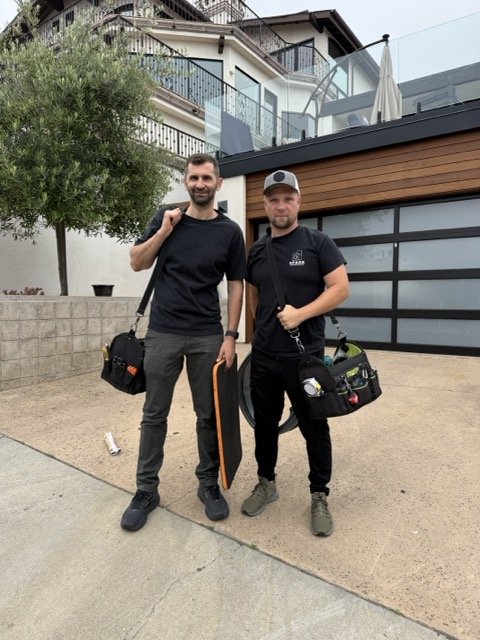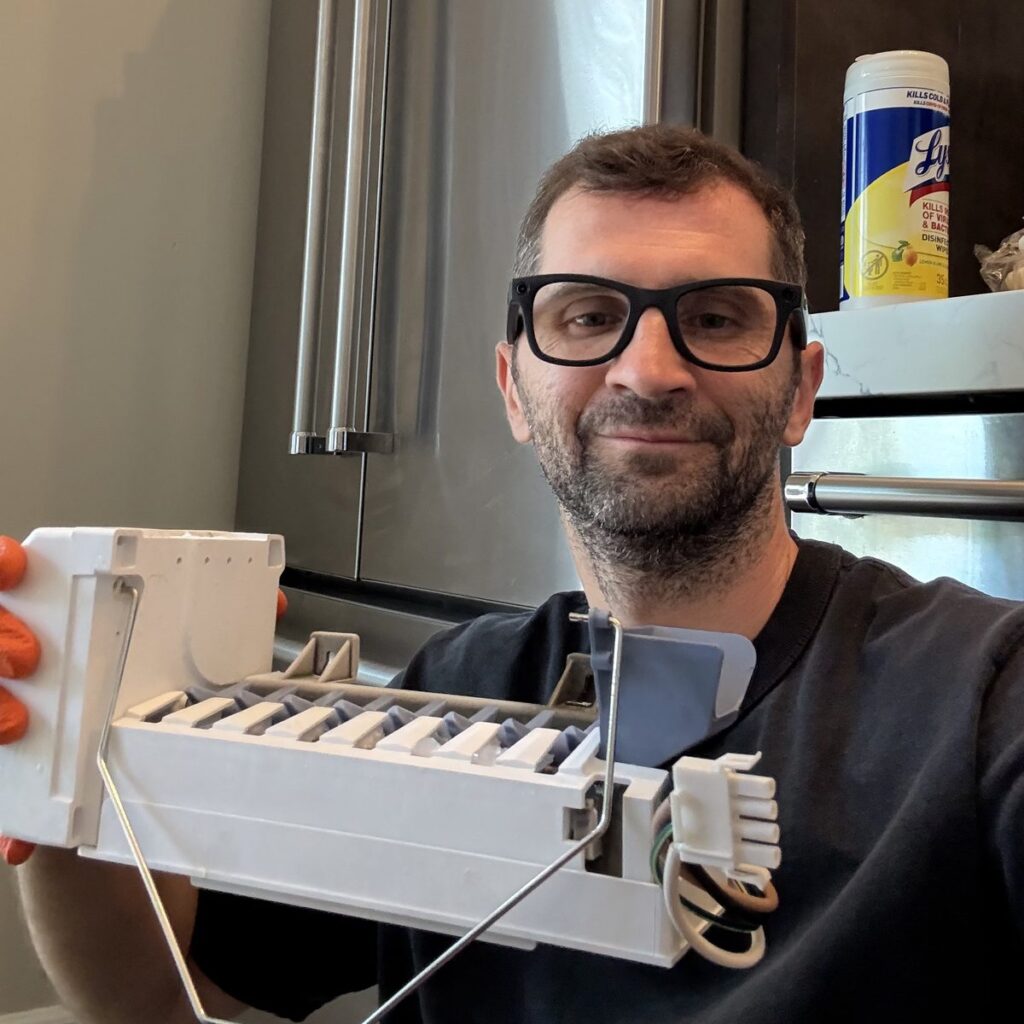
Every cube starts as a drop of water at the back of your kitchen wall — follow it through seven checkpoints and you’ll find exactly where the ice stops.
Every ice cube in your LG refrigerator starts as a drop of water at the back of your kitchen wall. When the ice stops, the problem is almost always at one of seven checkpoints along that route — so instead of guessing, do what our technicians do on every call: follow the water and find where it stops.
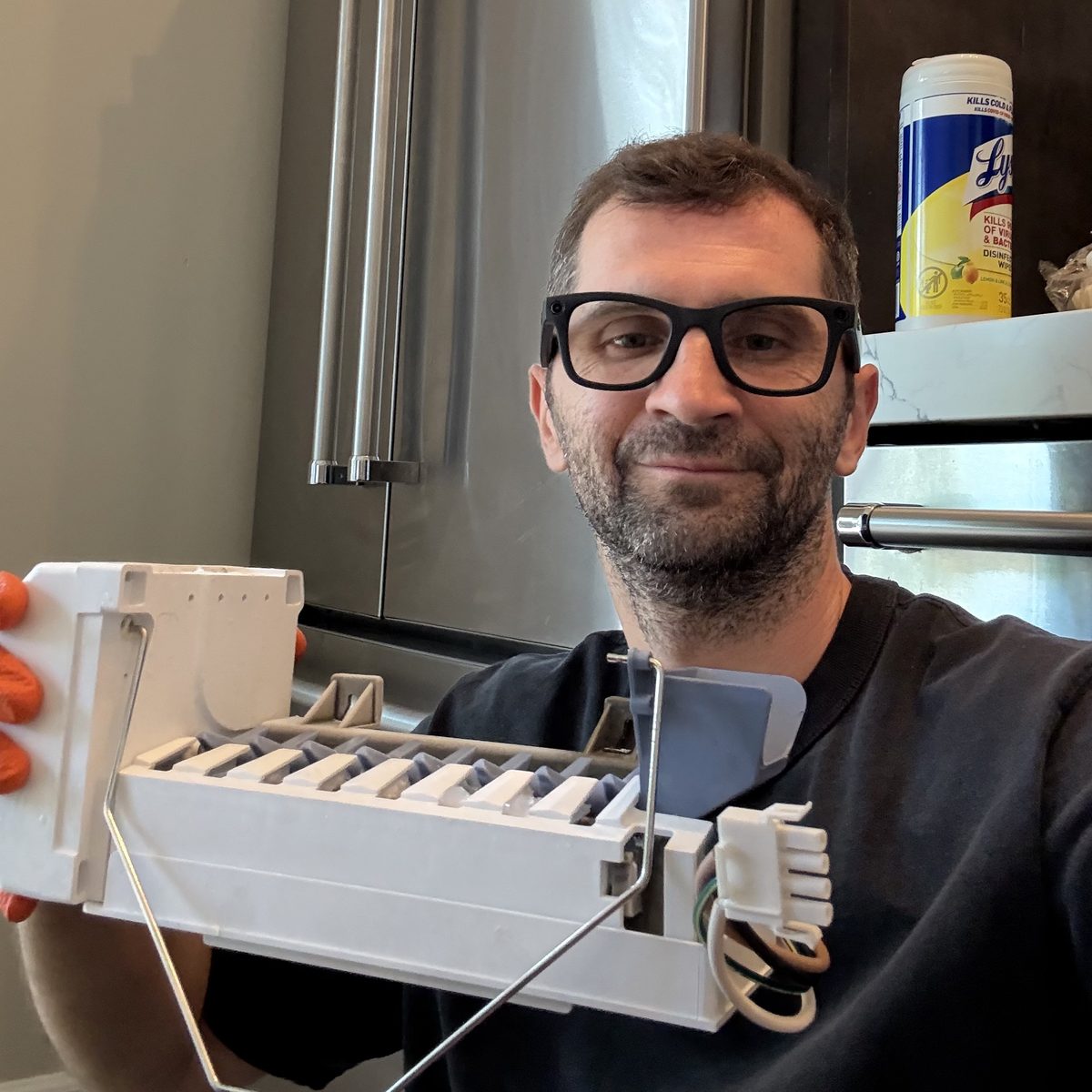
The route a drop of water takes inside your LG
House supply line → shut-off valve → dual inlet valve → filter → fill tube → tray → freeze cycle → twist harvest → bin → dispenser. Work through the stops in order — you’ll either fix it yourself or know exactly what to tell the technician.
Pick your checkpoint
BFill tube & tray — stops 4–5Frozen fill tubes and LG’s twist mold that has to sit level
CThe freeze & the test buttonStop 6 — freezer temperature, plus LG’s built-in 3-second diagnostic
DCraft Ice & the dispenserStop 7 — ice that never reaches the glass, and what’s normal for Craft Ice
Stop 1: The supply line and shut-off valve behind the fridge
How it fails: the quarter-turn valve behind the refrigerator gets bumped half-closed, or the supply line kinks when the fridge is pushed back after cleaning.
The check: pull the fridge forward, confirm the valve is fully open and the line has no sharp bends. LG ice makers need 20–120 psi — a half-open valve starves the ice maker first.
The tell: small, hollow, or half-size cubes — the tray is freezing whatever little water arrives.
Stop 2: The dual inlet valve — water works, ice doesn’t
This is the classic LG complaint: the door dispenser pours water fine, but the ice maker is bone dry. Most LG refrigerators use a dual inlet valve — one electric solenoid feeds the dispenser, a separate one feeds the ice maker. When the ice-maker side dies, the dispenser keeps working, so the fridge looks half healthy.
The check: run the test mode described below and listen for water entering the tray during the fill. Silence = nothing getting past the valve.
The fix: a technician confirms the dead solenoid with a multimeter — and rules out a broken wire in the door hinge, which mimics a bad valve — then replaces it. Testing first beats guess-and-swap.
Stop 3: The water filter — the 6-month rule
LG filters (LT700P and LT1000P are the common ones) are rated for about 6 months or 200 gallons. In San Diego’s hard water, an overdue filter clogs faster than the calendar suggests — and the ice maker, the lowest-pressure customer on the line, suffers first.
The check: when did you last change it? If the answer involves counting on fingers, replace it — and confirm the new filter is fully seated and rotated to lock. A half-seated LG filter blocks flow entirely.
The tell: ice production faded over weeks before stopping, and the water dispenser has gotten pokey too.
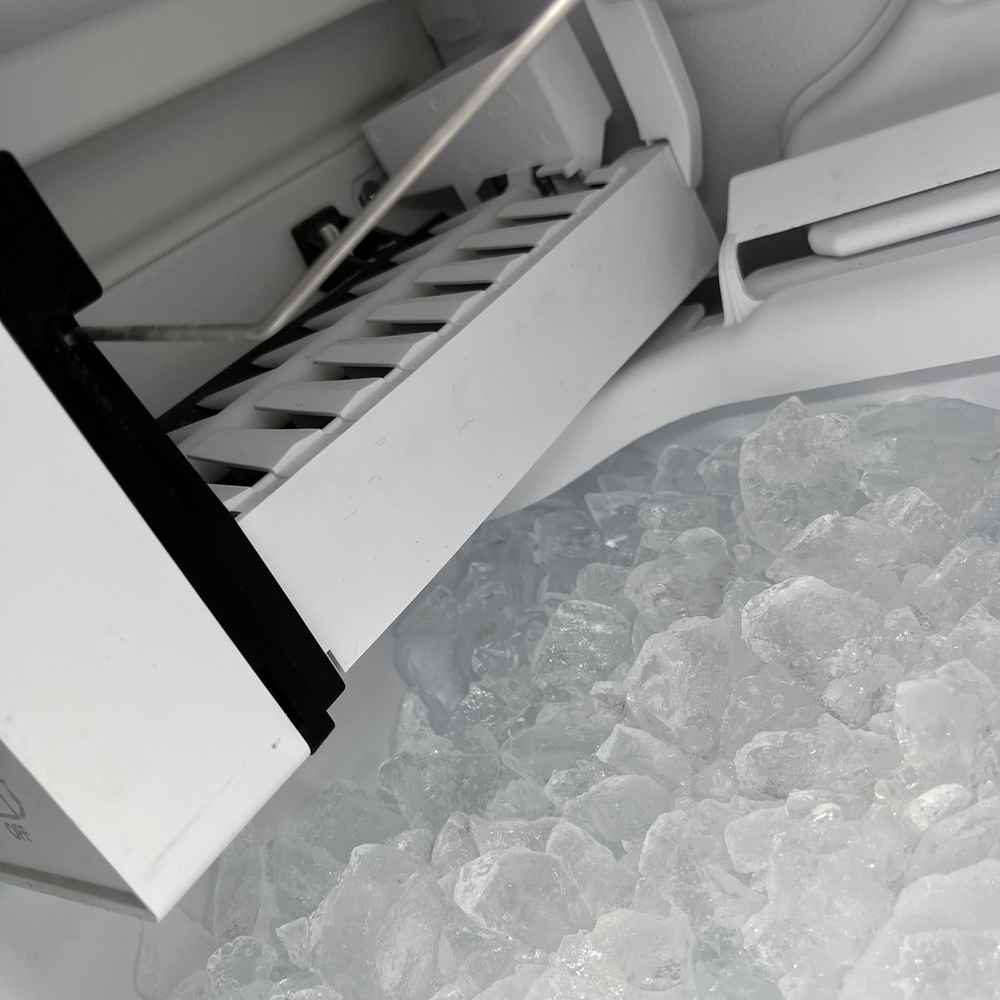
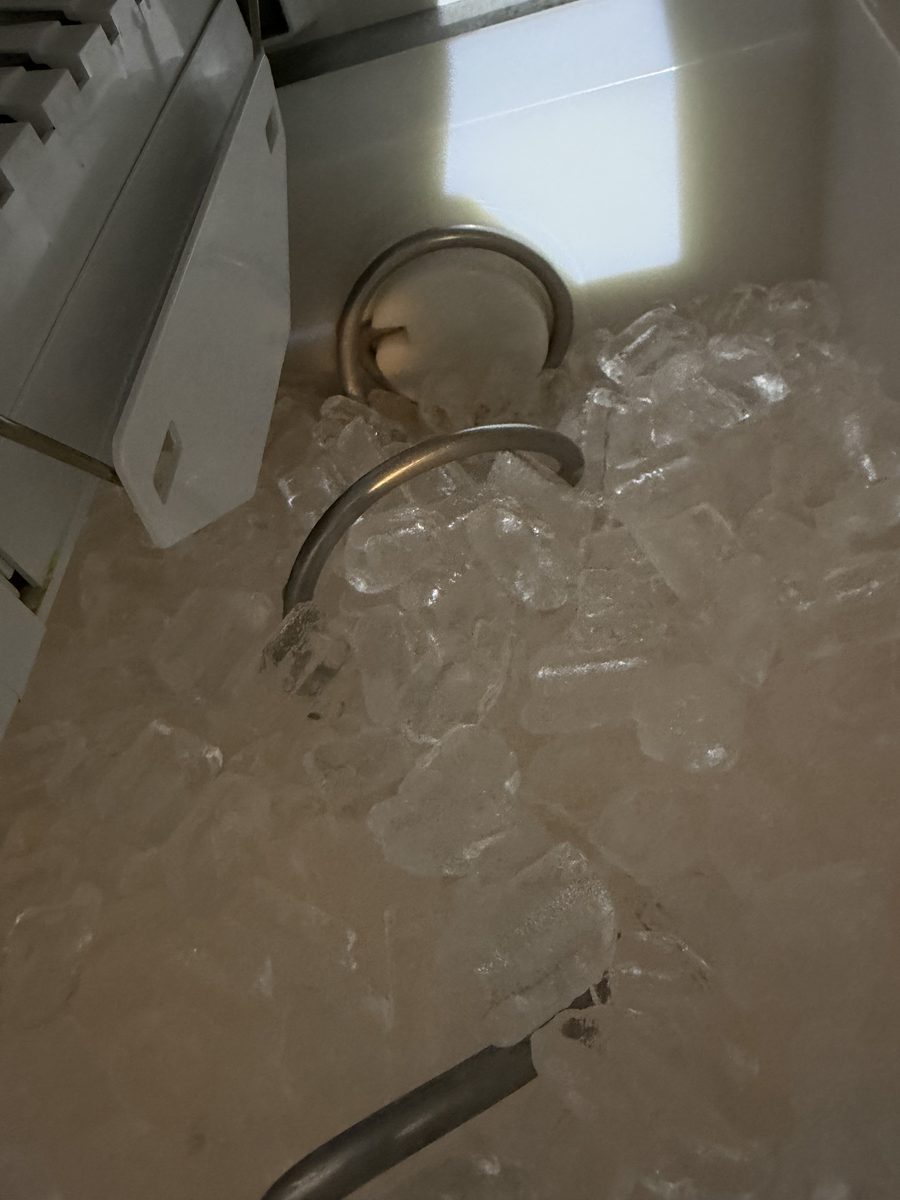
Stop 4: The fill tube — where the water freezes before it arrives
Water reaches the ice maker through a small fill tube — on many french-door LGs it runs inside the left door. If a slow-dripping valve lets water sit in the tube, it freezes into a plug, and every fill after that hits an ice wall.
The check: shine a flashlight at the fill tube behind the tray. A white plug of ice is your fault line.
The catch: a frozen fill tube is usually a symptom. If it refreezes within a week or two, a weeping valve or airflow problem is the real cause — a diagnostic visit, not a hair-dryer job.
Stop 5: The tray — LG’s twist mold has to sit level
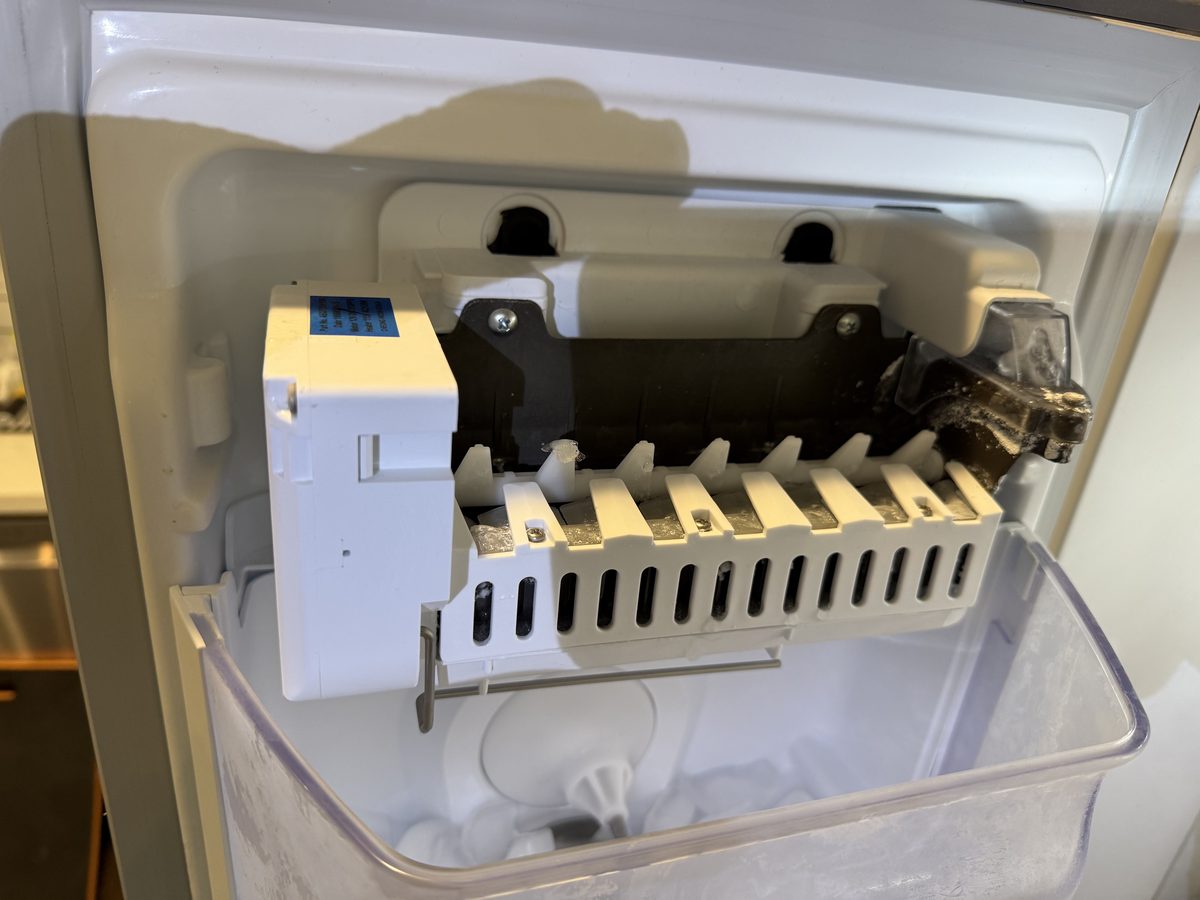
Most LG ice makers skip the old ejector-rake design — the tray itself twists to crack cubes loose and dump them. That only works if the tray is level, fully pushed into its socket, and latched, which is exactly what goes wrong after someone pulls it out to clean it.
The check: remove and reseat the tray — all the way in, level, click home. While it’s out, look for mineral scale or cube fragments jamming the twist path, and mind the sensor at the center of the mold.
The tell: water spills into the compartment, or the tray sits tilted like it froze mid-harvest.
Walked the water path and still no ice?
Same-day LG ice maker service across San Diego County — call before noon. $90 service call, credited toward the repair.
Stop 6: The freeze itself — cold enough, long enough
An ice maker is just a mold; the freezer makes the ice. LG wants the freezer at 0 to 5°F — above that, cycles stretch out or stall, because the ice maker won’t harvest until the tray sensor confirms a full freeze.
The check: read the actual temperature (a $10 thermometer beats trusting the display). Overstuffed shelves blocking vents, a door ajar, or dirty condenser coils all push it up.
Boost, don’t mask: LG’s Ice Plus / Express Freeze drops the freezer colder for up to 24 hours — useful before a party, but if you need it just to get normal ice, the freezer has a cooling problem. See our guide to an LG refrigerator not cooling — a cold ice maker needs a cold freezer first.
The 3-second test button: LG’s built-in lie detector
LG hid a diagnostic that answers two questions at once — does the motor run, and does water arrive?
- Remove the ice bin and lay a towel down (test mode dumps whatever’s in the tray).
- Find the test/fill button on the front or underside of the ice maker — on some models it’s a recessed hole you press with a straightened paper clip.
- Hold it about 3 seconds until the tray starts to rotate, then let go.
- Watch a full cycle: the tray twists and dumps, then the valve should send fresh water in.
Read the result like a technician: no movement = dead motor or no power. Moves but no water = the fault is upstream (stops 2–4). Moves and fills = the mechanism is fine; suspect freezer temperature or the sensor. If the fridge was just plugged in, give it two hours first; unplug 30 seconds between repeat tests.
Stop 7: The bin and the door — ice exists but never reaches the glass
If you hear ice dropping but nothing dispenses: pull the bin. In-door bins clump into one fused block when ice sits unused — dump it and let a fresh batch form. If loose ice still won’t dispense, the auger motor, dispenser flap, or chute solenoid is the fault line — technician territory. One note for code-watchers: an ER IF code points at the ice-maker fan; write it down for your tech rather than chasing it yourself.
Craft Ice owners: what’s normal vs. what’s broken
Before you book a repair on a Craft Ice model, know what LG actually designed it to do — the most common Craft Ice “failure” is working exactly as intended:
- 3 balls per day is normal. Craft Ice produces one batch of three spheres roughly every 24 hours in the default 3-ICE mode. 6-ICE mode gets you two batches a day — that’s the ceiling. Slow is the feature: slow freezing is what makes the spheres clear and slow-melting.
- The bin holds about 20–25 spheres, then production pauses until you use some.
- Cloudier spheres in 6-ICE mode are normal — faster freezing traps more air.
- Actually broken: zero spheres for 48+ hours with an empty bin, water leaking from the compartment, or grinding during harvest. Craft Ice is a separate ice maker with its own valve feed — it can fail while your cube maker works, and vice versa.
Where the DIY road ends
Everything above — valve position, filter swap, thawing a fill tube, reseating the tray, temperature, test mode — is safe homeowner work. Stop when the job becomes electrical testing or disassembly: the dual valve, door-hinge wiring, auger motors, control boards, sensors, or a fill tube that refreezes after thawing. On sealed in-door LG ice systems, a cracked housing costs more than the diagnosis would have.
That diagnosis is simple with us: a $90 service call fee, credited toward the repair when you go ahead. Our team works on LG ice makers across San Diego County every week — see our LG appliance repair page for full brand coverage.
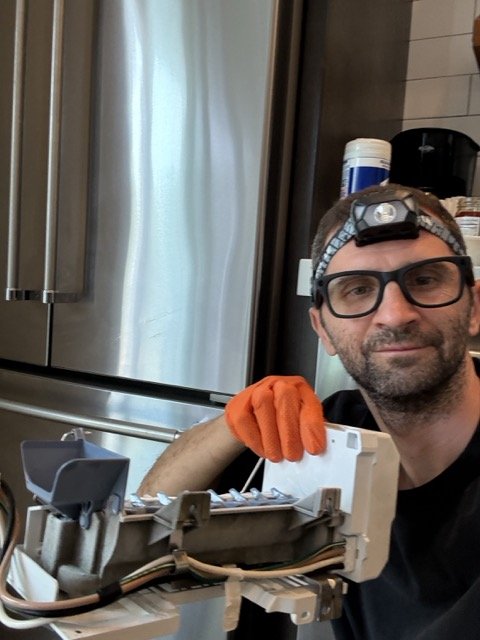
Need your LG making ice again? San Diego, we’ve got you today
Same-day service available when you call before noon. Our licensed and insured technicians carry common LG parts on the van, and every repair is backed by a 90-day warranty on parts and labor. The $90 service call fee is credited toward the repair — so the diagnosis effectively costs nothing when we fix it.
Frequently Asked Questions
Why does my LG water dispenser work but the ice maker doesn’t?
Because they’re fed by two different solenoids on LG’s dual water inlet valve. The ice-maker side of the valve can fail — or its screen can clog with San Diego’s hard-water scale — while the dispenser side keeps flowing. A technician confirms it with a multimeter before replacing the valve.
How do I run the test mode on an LG ice maker?
Remove the ice bin, put a towel down, then press and hold the test/fill button on the front or underside of the ice maker for about 3 seconds until the tray starts to rotate (some models have a recessed hole — use a paper clip). If the tray turns but no water enters afterward, the problem is upstream: valve, filter, or fill tube.
My LG Craft Ice maker only makes 3 ice balls a day. Is it broken?
No — that’s the design. Craft Ice makes one batch of three spheres about every 24 hours in the default mode, or six per day in 6-ICE mode. The slow freeze is what makes them clear and slow-melting. It’s only broken if it makes zero spheres for 48+ hours with an empty bin.
How often should I replace my LG refrigerator water filter?
Every 6 months or about 200 gallons — that covers the common LT700P and LT1000P filters. With San Diego’s hard water, don’t stretch it: a clogged filter starves the ice maker first.
What temperature should my freezer be for the ice maker to work?
Between 0 and 5°F. Any warmer and LG ice cycles stretch or stall, because the tray won’t harvest until the mold is fully frozen. Check with a real thermometer and keep freezer vents unblocked.
How much does LG ice maker repair cost in San Diego?
Spark charges a $90 service call fee that’s credited toward the repair when you proceed, and every repair carries our 90-day warranty on parts and labor. Same-day service available across San Diego County when you call (619) 330-5105 before noon.
Empty bin tonight? Full bin tomorrow
Call before noon and a technician can usually be at your door the same day, with the common LG ice maker parts already on the van. The $90 service call is credited toward your repair, and every job is backed by a 90-day warranty on parts and labor.